Brighten Up Your Living Room with Track Lighting Ideas
Let’s talk about track lighting for your living room. It might not be the first thing that comes to mind when you think “cozy living room,” but done right, it’s incredibly versatile and can seriously up your lighting game. The main question people have is: can track lighting actually make a living room feel brighter and more inviting, rather than industrial? The short answer is yes, absolutely. When you understand how to use it, track lighting offers a really flexible way to illuminate everything from artwork to dark corners, and even provide general ambient light, all without a massive renovation. We’ll dive into how to achieve that just right balance.
Before we get into the pretty stuff, let’s get a handle on what track lighting Tomosshop actually is. It’s not just that industrial-looking bar with a bunch of exposed bulbs you might see in a workshop. Modern track lighting systems are much more sophisticated.
What Exactly is Track Lighting?
At its core, track lighting consists of a metal track, which is essentially a conduit that carries electricity. Mounted to this track are individual light fixtures, called “heads” or “spotlights.” The beauty of track lighting lies in its flexibility. You can position these heads anywhere along the track, adjust their direction, and even swap them out for different types of fixtures to suit your needs.
The Evolution of Track Lighting
Gone are the days when track lighting was synonymous with stark, utilitarian spaces. Manufacturers have really upped their game. You can now find track systems in a wide array of finishes – brushed nickel, bronze, black, even white – that blend seamlessly with different decor styles. The fixtures themselves have also evolved. You’ll see sleek, minimalist designs, more decorative options, and even low-profile systems that are almost unnoticeable when installed.
Key Components: What You Need to Know
- The Track: This is the backbone. Tracks come in various lengths and can often be connected to create longer runs or even customized shapes like L-shapes or U-shapes.
- Power Feed/Connector: This is where the electricity enters the track system. You can have these feed from the ceiling, a wall, or even from the end of the track.
- End Caps: These simply cover the open ends of the track.
- Mounting Hardware: This is what secures the track to your ceiling or wall.
- The Light Fixtures (Heads): This is where the magic happens. These are the individual lights you clip onto the track. Their design and adjustability are key.
Beyond the Basics: Designing Your Track Lighting Layout
This is where you move from simply understanding what track lighting is to figuring out how to make it work for your living room. It’s less about following rigid rules and more about a thoughtful approach to illuminating your space effectively.
Defining Your Lighting Goals
Before you even pick out a track, think about what you want to achieve with the lighting. Is your living room primarily for watching TV, hosting guests, reading, or a bit of everything? Your goals will dictate the type and placement of your lights.
Balancing Ambient, Task, and Accent Lighting
This is a fundamental concept in interior lighting, and track lighting is fantastic at achieving it.
- Ambient Lighting: This is your general, overall illumination. Think of it as the soft glow that fills the room and allows you to move around safely. With track lighting, you can achieve this by using wider-beam spotlights spaced along the track.
- Task Lighting: This is focused light for specific activities, like reading a book or working on a craft. For the living room, this might mean directing a spotlight towards a reading chair.
- Accent Lighting: This is used to highlight architectural features, artwork, or decorative objects. Track lighting excels here, allowing you to precisely aim spotlights.
Common Track Layouts and Their Uses
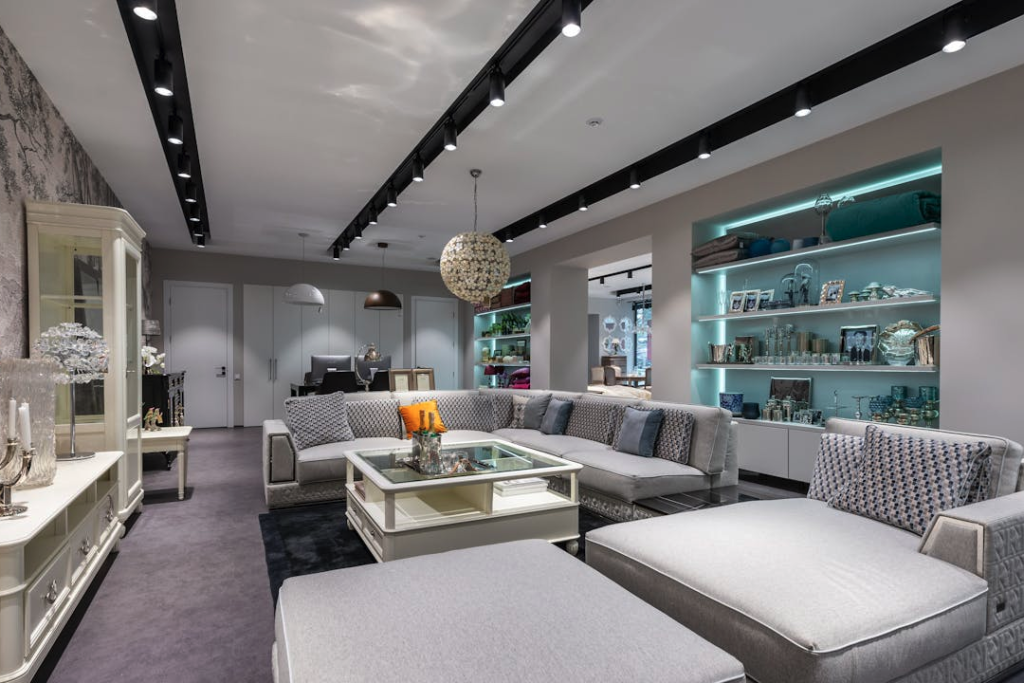
- Straight Line: The simplest and most common. Great for running along a wall to light artwork or a seating area.
- L-Shape or U-Shape: Connect multiple track pieces to create a more versatile system that can cover a larger area or bend around corners.
- Perimeter Lighting: Running a track around the edge of the room can provide a good base of ambient light and also accent the walls.
- Grid Layout: For larger rooms, you might consider a more structured grid to ensure even illumination, though this can sometimes feel a bit too uniform if not carefully planned.
Strategic Placement: Maximizing Light and Minimizing Glare
This is arguably the most critical part. Where you put the track and how you angle the heads makes all the difference between a well-lit room and one that feels harsh or incomplete.
Ceiling vs. Wall Mounting: Weighing Your Options
- Ceiling Mounted: This is the standard. It allows for the widest range of illumination angles. For ambient light, you’ll want fixtures that can diffuse light across the ceiling and walls. For accent or task lighting, you’ll aim them downwards.
- Wall Mounted: Less common, but can be very effective. A track mounted along a wall near the ceiling can highlight artwork directly opposite or provide a wash of light down a wall.
The 45-Degree Rule for Artwork and Objects
When you’re using track lighting to highlight artwork or objects, aim for a roughly 45-degree angle from the object. This helps to illuminate the surface evenly without creating harsh shadows or distracting reflections on glossy surfaces. Experimentation is key here; what looks perfect for one piece of art might need a slight adjustment for another.
Avoiding Glare and Direct Eye Impact
Harsh glare is the enemy of a comfortable living room. Here’s how to combat it:
- Baffled or Recessed Fixtures: Look for track heads that have internal baffles or are recessed. These features help to shield the bulb and direct the light more precisely, reducing unwanted glare.
- Diffusers: For ambient light, consider fixtures with frosted glass or other diffusers. This softens the light and spreads it more evenly.
- Beam Angle: Pay attention to the beam angle of your bulbs. A wider beam angle (e.g., 60 degrees or more) is good for general illumination, while a narrower beam angle (e.g., 10-30 degrees) is better for accenting specific items.
- Consider Dimmer Switches: This is non-negotiable for living room track lighting. Dimmers allow you to adjust the intensity of the light, which is crucial for different moods and activities. You can have bright light for entertaining and a softer glow for relaxing.
Lighting Around Furniture and Seating Areas
How you light areas where people will be sitting is crucial for comfort.
- Overhead Over Sofas/Chairs: A track running parallel to a sofa can provide ambient light and also allow you to direct a spotlight for reading. Position it slightly forward of the sofa to avoid shining directly into people’s eyes when they’re seated.
- Near Wall-Mounted TVs: This is a tricky one. You want enough light to prevent eye strain from looking at a bright screen in a dark room, but you don’t want reflections on the TV. Consider lighting that bounces off the walls behind the TV rather than directly onto it.
Choosing the Right Fixtures and Bulbs for Your Style
The track system is just the frame; the fixtures and bulbs are what bring the light to life, and they play a huge role in the overall aesthetic.
Types of Track Light Fixtures
- Spotlights: The classic choice. They offer directional light and are great for accenting. They come in various sizes and styles.
- Floodlights: Similar to spotlights but with a wider beam spread, making them good for general illumination or lighting larger areas.
- Pendants: Yes, you can hang pendant lights from track systems! This is a fantastic way to add decorative flair and focused light, perhaps over a coffee table or armchair.
- Linear Heads: These are longer, bar-like fixtures that can provide a more even wash of light over a surface.
- Recessed Heads: These sit almost flush with the track, offering a very clean, minimalist look.
The Importance of Bulb Technology (LEDs are Your Friend)
This is one area where technology has made a massive leap.
- LEDs: They are the undisputed champions now.
- Energy Efficiency: They use a fraction of the energy of incandescent or halogen bulbs.
- Longevity: They last significantly longer, meaning you won’t be changing bulbs every few months.
- Color Rendering Index (CRI): This measures how accurately a light source reveals the true colors of objects. Look for LEDs with a CRI of 90 or higher for your living room to make your decor and artwork look their best.
- Color Temperature: Measured in Kelvin (K), this dictates the warmth or coolness of the light.
- Warm White (2700K-3000K): This is typically what people associate with a cozy, inviting living room. It’s yellowish and soft.
- Neutral White (3500K-4000K): Brighter and cleaner, good for task lighting or if you prefer a more modern feel.
- Cool White (5000K+): Can feel clinical and is generally not recommended for living room ambiance.
Matching Fixture Styles to Your Decor
- Modern/Minimalist: Look for sleek, unadorned tracks and fixtures in brushed nickel, black, or matte white. Simple, geometric shapes are key.
- Traditional/Transitional: Consider tracks with bronze or antique brass finishes. Fixtures with slightly more detail, perhaps a bell shape or a subtle decorative element, can work well.
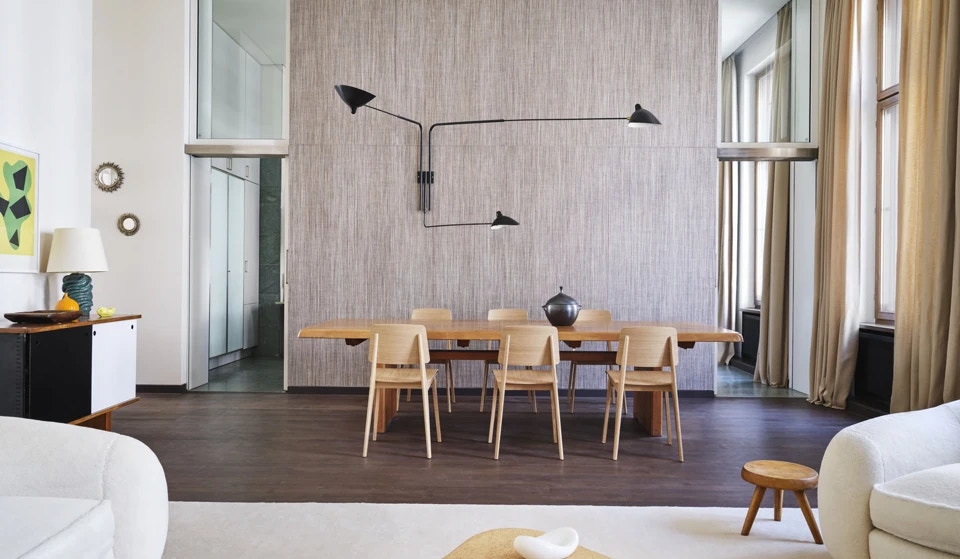
- Industrial Chic: Exposed bulbs and metal finishes are your friend here. Don’t be afraid of a slightly more raw aesthetic if it fits your overall design.
Creative Applications: Thinking Outside the Box
Track lighting isn’t just for pointing at paintings. There are some really smart, creative ways to use it to enhance your living room.
Lighting Up Dark Corners and Awkward Spaces
Every living room has those areas that tend to get a bit dim. Track lighting can be a lifesaver here.
- Corner Illumination: A track run along the corner of the room, with heads angled towards the walls, can effectively brighten up these often-neglected areas and make the room feel larger.
- Behind Furniture: If you have a large bookshelf or cabinet that creates a shadow, repositioning a track or adding a smaller one nearby can eliminate that dark patch.
Creating Mood and Ambiance
This is where dimmers and bulb selection become your best friends.
- ‘Washing’ Walls: By angling heads towards the walls (not directly down), you can create a gentle “wash” of light that adds depth and warmth. This is particularly effective with warmer color temperatures.
- Highlighting Textures: Directing light at a specific angle onto a textured wall, a brick fireplace, or a heavily woven rug can bring out its character and add visual interest. This is called “grazing.”
Integrating with Other Lighting
Track lighting doesn’t have to be the only light source. It works beautifully to supplement other types of lighting.
- Pairing with Floor Lamps and Table Lamps: Use your track lighting to fill in the gaps and provide focused illumination, while floor and table lamps add softer, more localized pools of light.
- Complementing Recessed Ceiling Lights: If you have recessed lights, track lighting can provide more targeted accent and task lighting where those general lights fall short.
Using Track Lighting for More Than Just General Illumination
- Highlighting Architectural Features: Got a cool beam, a textured ceiling, or an interesting ledge? Track lighting can be aimed precisely to draw attention to these elements.
- Functional Lighting for Specific Zones: If you have a reading nook, a small desk area, or even a plant that needs light, a few well-placed track heads can serve these specific purposes without cluttering the space with extra lamps.
Installation and Practical Considerations
While track lighting offers amazing flexibility, a little forethought about installation will save you headaches down the line.
DIY vs. Professional Installation
- DIY: If you’re comfortable with basic electrical work (and by “basic,” I mean wiring a simple fixture and understanding safety precautions), many track lighting systems are designed for relatively straightforward DIY installation. You’ll need to be comfortable working with wiring diagrams and ensuring the power is off at the breaker.
- Professional: If you’re not confident with electrical work, or if your desired layout is complex (e.g., involves extending from an existing circuit or custom bending), it’s definitely worth hiring an electrician. They can ensure everything is up to code and safe.
Planning Your Power Source
Where will the electricity come from? This is a fundamental question.
- From an Existing Ceiling Box: This is the easiest scenario. You cap off the existing fixture and run your track power feed from there.
- From a Junction Box: If there isn’t a convenient ceiling box, a junction box can be installed.
- Switched Power: Ensure your track lighting is connected to a wall switch so you can easily turn it on and off and, ideally, connect it to a dimmer.
Track Length and Configuration
- Measure Twice, Cut Once: Literally. Measure the space where you plan to install the track and consider how many sections you’ll need and if any connectors are required.
- Flexibility of Connectors: Don’t be afraid to use L-connectors, T-connectors, or even flexible connectors to create angles or adapt to room layouts. These are crucial for making track lighting truly custom.
Maintenance and Bulb Replacement
Even though LEDs last a long time, you’ll eventually need to replace them.
- Easy Access: Most track heads are designed to easily twist or clip open for bulb replacement.
- Keeping it Clean: Dust can accumulate on fixtures and affect light output. A simple dusting every few months will keep things looking their best.
By approaching track lighting with a clear vision for your living room’s ambiance and function, you can transform it into a space that’s not just brighter, but also more inviting, more adaptable, and a true reflection of your personal style.